

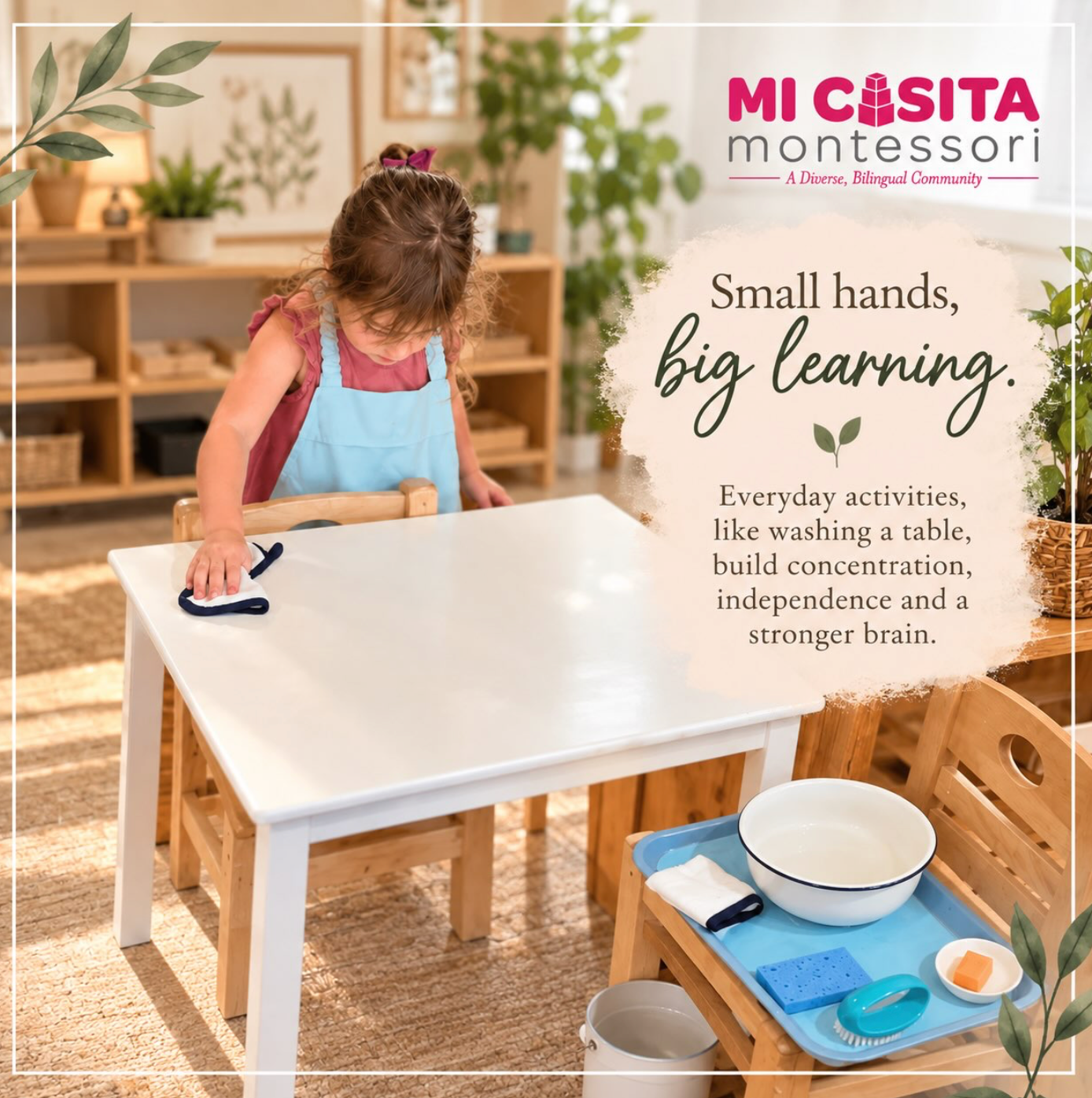
A child wipes a table, pours a drink, or helps carry napkins to lunch. These tasks can look ordinary. That is part of what makes them valuable: children are participating in the real life of their classroom and family.
Montessori educators often call this Practical Life. It includes caring for yourself, caring for your surroundings, and helping other people. The goal is not a spotless table or a perfectly poured glass. Children are practicing movements, learning a sequence of steps, noticing their surroundings, and discovering that they can contribute.
Think about everything involved in pouring a small drink. A child has to lift the pitcher, judge how far to tilt it, watch the water level, stop, and put the pitcher down. If some water spills, there is another task to learn: finding a cloth and wiping it up. With patient practice, the child gains coordination and a better sense of what their hands can do.
Real tasks can also give children a place in family life. A young child may be more interested in washing a vegetable beside you than in playing with a toy while you make dinner. Their help will take longer at first. You can make it manageable by choosing one small step instead of inviting them into the entire job.
Start with a task that belongs in your routine. An older toddler might carry napkins to the table, place clothes in a hamper, or wipe a low surface. A preschooler might wash produce, match socks, or water a plant with a small pitcher. An infant can watch and hear you describe what you are doing. Match every activity to your child’s abilities, supervise closely, and keep sharp tools, hot surfaces, choking hazards, and cleaning chemicals out of reach.
Show the task without expecting perfection. Demonstrate slowly. Give your child a chance to try. If there is a spill, treat cleanup as part of the activity: “The water is on the table. Let’s get the cloth.” The child learns that mistakes can be addressed calmly.
Try this at home: Choose one task that happens almost every day. Prepare a child-sized part of it and invite your child to help for a week. Notice whether the task becomes more familiar and whether your child begins to take initiative.
Children often take pride in being genuinely useful. If you would like ideas suited to your child’s current interests, ask us which Practical Life activities they enjoy at Mi Casita.
More activities to try at home
Pour a small amount
Use a sturdy, child-appropriate pitcher with just a little water, a cup, and a tray. Show lifting, tilting, stopping, and putting it down. Stay beside your child and let them repeat. Keep water amounts small and clean spills promptly so the floor stays safe.
Wipe the table in a sequence
Provide a clean cloth dampened with water, without cleaning chemicals. Show wiping one small area and returning the cloth to its place. Invite your child to do another area. Adults handle sanitation and hazardous messes; a child’s practice is not a replacement for proper cleaning.
Help prepare a meal
After handwashing, invite your child to rinse produce under adult supervision or tear washed lettuce into a bowl. Keep them away from hot surfaces, sharp tools, and foods that pose choking risks. An adult handles cutting and prepares any food for safe eating.
Care for clothes or a plant
Offer a small pile of clean socks to match or a cloth to fold. For plant care, select a nontoxic plant out of reach of babies and explain how much water it needs. Use a small pitcher with adult supervision and include putting tools away.
A small plan for this week
Repeat one useful job this week, including setup and cleanup. Notice whether your child remembers a step or begins to help without prompting. Add complexity gradually instead of expecting an adult-quality result.
Keep Learning
Helping Your Child Become More Independent at Home
Creating a Simple Montessori Space at Home